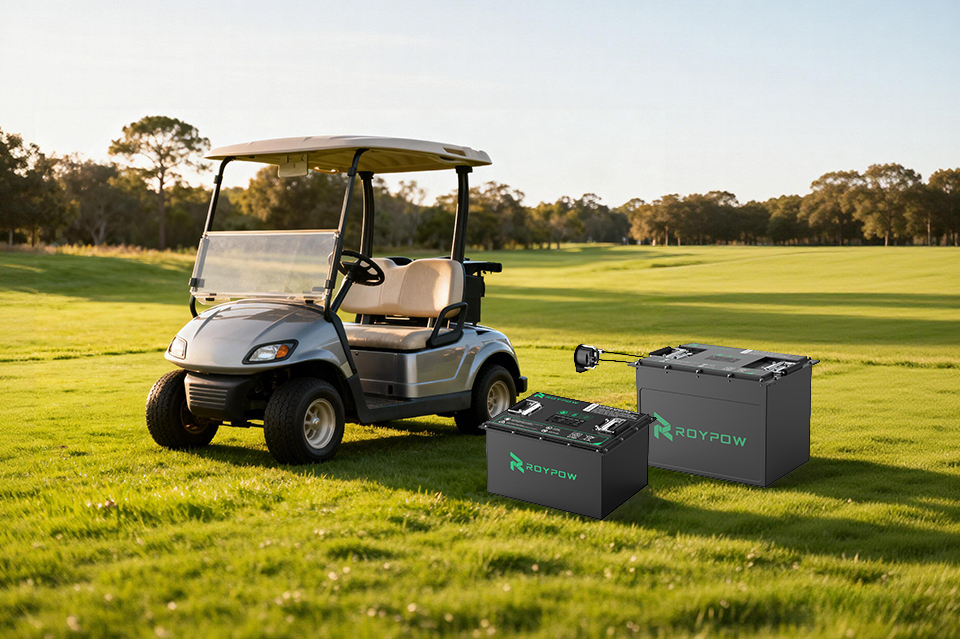
Fast Answer: What Yamaha Drive2 Owners Need to Know

If you own a Yamaha Drive2 electric golf cart with the PowerTech AC system, a lithium upgrade can be one of the most practical performance, maintenance, and lifetime-cost improvements you can make. For most global world users, the best conversion path is to replace the factory lead-acid pack with a properly sized LiFePO4 battery system, use a lithium-compatible charger, confirm controller and regenerative braking compatibility, secure all cables and mounting hardware, and verify voltage, state of charge, and BMS operation before returning the vehicle to daily service.
The Yamaha Drive2 is often considered one of Yamaha’s most lithium-friendly platforms because many models already use an AC drive system, efficient motor control, and a relatively modern electrical architecture. That does not mean every battery can be installed without planning. A successful Drive2 lithium conversion depends on matching system voltage, discharge capability, peak current, communication requirements, charging profile, physical dimensions, and installation safety. A battery that looks correct on paper may still be unsuitable if its battery management system, or BMS, cannot handle acceleration peaks, hill climbing, regenerative braking current, or hot and cold operating conditions.
For a simple answer, most standard Yamaha Drive2 PowerTech AC carts used on golf courses, private estates, resorts, campuses, and community transport routes work well with a 48V LiFePO4 system sized around 72Ah, 105Ah, or 160Ah depending on range needs. A 72Ah battery is commonly chosen for lighter use and shorter daily routes. A 105Ah option is a balanced choice for frequent driving, moderate hills, and accessories. A 160Ah option is best for long-range use, commercial fleets, resort shuttles, hilly communities, or carts carrying multiple passengers and accessories.
The original lead-acid charger should not be reused for lithium unless it has a confirmed lithium charging profile approved by the battery supplier. Lead-acid chargers are designed around absorption and float stages that do not match LiFePO4 chemistry. Using the wrong charger may shorten battery life, trigger BMS protection, create inaccurate state-of-charge readings, or cause safety risks. A purpose-built Golf Cart Battery Charger matched to the battery voltage and chemistry is a core requirement, not an optional accessory.
In global markets such as North America, Europe, Australia, the Gulf region, Southeast Asia, South Africa, Japan, and Latin America, lithium conversions are increasingly driven by the same priorities: lower maintenance, less downtime, lighter vehicle weight, longer runtime, faster charging, improved energy efficiency, and reduced lifecycle cost. Ports such as Rotterdam, Los Angeles, Singapore, Hamburg, Jebel Ali, Sydney, Durban, and Santos also influence availability because golf cart batteries and chargers are commonly distributed through international logistics hubs before reaching local dealers and service centers.
| Question | Quick Answer | Why It Matters |
|---|---|---|
| Can a Yamaha Drive2 use lithium? | Yes, when the voltage, BMS, charger, and installation are correct. | Compatibility prevents nuisance shutdowns and protects vehicle electronics. |
| Is the Drive2 better than older Yamaha carts for lithium? | Usually yes, especially PowerTech AC models. | Modern AC systems are efficient and respond well to weight reduction. |
| Can I keep my lead-acid charger? | Generally no. | LiFePO4 requires a lithium charging profile and correct cutoff behavior. |
| Which capacity is best? | 72Ah for light use, 105Ah for balanced use, 160Ah for extended range. | Capacity determines range, voltage stability, and duty-cycle comfort. |
| Does regenerative braking matter? | Yes, the BMS must accept regen current safely. | Incompatible BMS behavior can cause braking or controller issues. |
| Is lithium cheaper over ten years? | Often yes. | Lower maintenance, fewer replacements, and energy savings reduce total cost. |
This table shows why a Drive2 lithium upgrade should be viewed as an electrical-system conversion rather than a simple battery swap. The best results come from selecting the battery, charger, cabling, mounting, and support provider as one complete system.
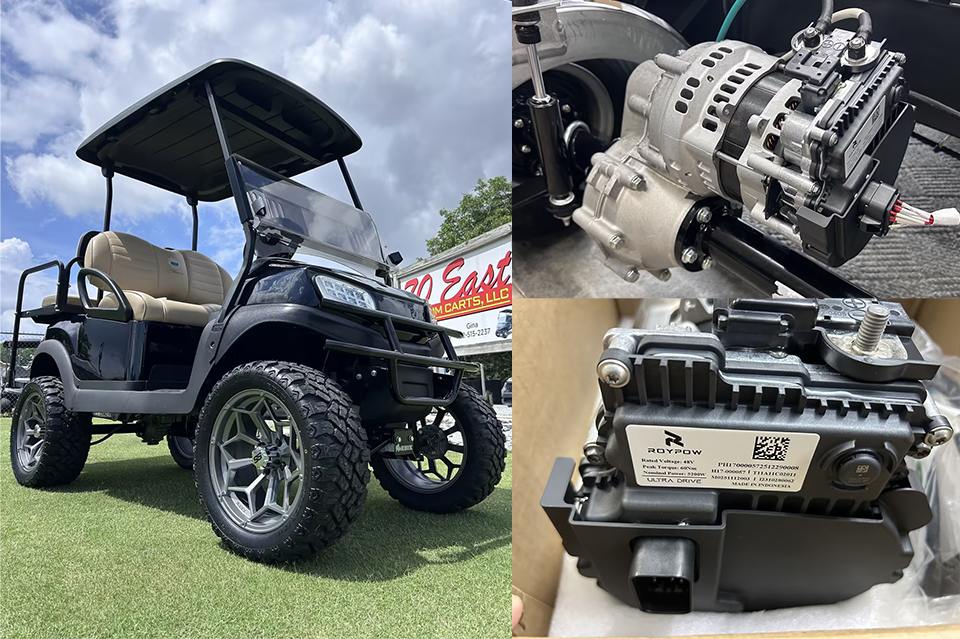
Yamaha Drive Compared with Drive2: Reading the Electrical Platform

Before buying a lithium pack, owners should identify whether they have a Yamaha Drive, often known as the G29, or the newer Yamaha Drive2. The distinction matters because different model years and configurations may use different drive systems, controllers, wiring layouts, and onboard equipment. The Yamaha Drive was widely used in golf courses and communities around the world, while the Drive2 brought updated styling, improved ergonomics, and in many electric versions, refined AC powertrain features.
In everyday conversation, many owners use “Yamaha Drive” and “Yamaha Drive2” interchangeably, but technicians should not. A battery quote should always start with the cart’s model year, voltage, motor type, controller type, serial information, tire size, passenger configuration, accessory load, and driving environment. A cart operating on flat fairways in Florida, Dubai, or Singapore has a different energy profile from one climbing steep private roads near Cape Town, San Francisco, Auckland, or the hills around Lisbon.
Most Yamaha Drive2 PowerTech AC carts are designed around a 48V nominal lead-acid system. A typical factory lead-acid arrangement may use multiple 8V or 12V batteries wired in series. The total nominal voltage is the key figure, not the number of physical battery cases. When converting to lithium, many owners choose a single integrated LiFePO4 pack or a matched set of lithium modules designed for golf cart use. Integrated packs are popular because they often include a central BMS, state-of-charge display, CAN or communication options where applicable, heating options in some markets, and simplified installation.
The Drive2 electrical system includes several areas that should be checked before conversion. First, inspect the main positive and negative cables for corrosion, heat damage, loose terminals, or undersized aftermarket additions. Second, verify that the solenoid, controller, and motor are in good working condition. Third, review any accessories such as lights, sound systems, USB chargers, 12V converters, GPS units, coolers, fans, heaters, or fleet telematics. Accessories can increase energy demand and may require a high-quality DC-DC converter rather than tapping one battery module.
Owners should also understand the difference between nominal voltage and charging voltage. A 48V LiFePO4 golf cart battery is not charged in the same way as a 48V lead-acid pack. Lead-acid voltage falls more gradually and needs periodic maintenance, while LiFePO4 maintains a flatter voltage curve and then drops near the end of capacity. This flat curve is one reason lithium carts feel more consistent during the day, but it also means a traditional lead-acid voltmeter may not accurately show remaining range. A proper battery display or BMS-connected monitor is preferred.
| Feature | Yamaha Drive | Yamaha Drive2 | Lithium Conversion Impact |
|---|---|---|---|
| Common identity | Often called G29 | Updated successor platform | Model verification avoids wrong parts. |
| Electric system type | Varies by year and market | Often PowerTech AC in electric models | AC systems need BMS compatibility checks. |
| Battery layout | Multiple lead-acid batteries | Multiple lead-acid batteries | Lithium may use one integrated pack. |
| Accessory wiring | Often modified over time | May include more modern accessories | DC-DC converter planning is important. |
| Range behavior | Depends heavily on lead-acid condition | Improves strongly with lithium | Weight reduction and voltage stability help. |
| Service approach | More inspection needed on older carts | Usually cleaner conversion starting point | Still requires full electrical inspection. |
The table highlights a practical reality: both Yamaha Drive and Drive2 carts can often be upgraded, but the Drive2 provides a more modern foundation. For buyers comparing used carts in cities such as Phoenix, Orlando, London, Melbourne, Riyadh, São Paulo, Johannesburg, or Bangkok, a Drive2 with a healthy AC system may command a premium because it can be converted to lithium more confidently and deliver strong long-term value.
For owners unsure of their voltage platform, checking the existing battery compartment is useful but not enough. Count the batteries, read their labels, and confirm wiring, but also check the vehicle manual or serial data. If your vehicle is not a 48V system, use the correct voltage category. ROYPOW, for example, provides lithium solutions across 36V, 48V, and 72V golf cart platforms, including 36V Golf Cart Batteries, 48V Golf Cart Batteries, and 72V Golf Cart Batteries for different vehicle requirements.
Why Drive2 Is Yamaha’s Strongest Match for Lithium Power

The Yamaha Drive2 is especially attractive for lithium conversion because it combines a relatively efficient chassis, modern electric drive behavior, and a battery compartment that can often accommodate purpose-built LiFePO4 packs. When lead-acid batteries are removed, the cart may lose a substantial amount of weight. This weight reduction improves acceleration response, reduces rolling strain, helps suspension components, and can increase range. On golf courses, lighter carts can also reduce turf stress, particularly in wet climates or coastal regions.
Another reason the Drive2 responds well to lithium is voltage stability. Lead-acid batteries experience voltage sag under load, especially when older, partially discharged, or used in high-current conditions. This sag can make a cart feel weaker on hills or near the end of the day. LiFePO4 batteries maintain voltage more consistently through much of their usable capacity, so the vehicle often feels more predictable. For resort operators in places like Bali, Cancun, Dubai, Mauritius, Phuket, and the Mediterranean coast, consistent performance across many guest trips can be more important than peak speed.
The PowerTech AC system also supports smooth torque delivery and efficient motor control. When paired with a suitable lithium battery, the result is not just a lighter cart but a more energy-efficient vehicle. However, this advantage depends on proper battery discharge ratings. Golf carts draw high current during acceleration, hill climbing, and passenger loading. A battery designed only for low-current energy storage may not be appropriate. The BMS must handle continuous and peak loads without shutting down unexpectedly.
From a market perspective, the Drive2’s lithium friendliness aligns with global electrification trends. Golf courses, universities, airports, theme parks, industrial campuses, farms, gated communities, hotels, and logistics facilities are increasingly standardizing around lithium motive power. In many regions, fleet managers want fewer watering schedules, fewer acid spills, fewer replacement cycles, and lower charging-room ventilation concerns. Lithium systems do not eliminate the need for safety practices, but they remove many lead-acid maintenance tasks.
Technology capability is central to this transition. ROYPOW focuses exclusively on lithium battery technology and develops lithium-ion replacements for lead-acid applications rather than producing lead-acid batteries. Its in-house capabilities cover BMS design, pack engineering, system integration, industrial design, inverter-related development, and software support. For a Yamaha Drive2 owner, this matters because the battery is not simply a box of cells. It is a managed electrical system that must communicate internally, protect itself, deliver current, charge safely, and remain reliable across temperature, vibration, and daily cycling.
The global world market also requires product flexibility. A private cart in a retirement community near Tampa may only drive several miles per day. A maintenance cart at a resort in the Maldives may run long hours with tools and supplies. A security vehicle at a logistics hub near Rotterdam or Singapore may operate in shifts. A campground cart in Canada may sit through cold seasons. Lithium-friendly does not mean one battery fits every Drive2. It means the platform can accept well-engineered lithium solutions when selected properly.
| Drive2 Advantage | Lead-Acid Limitation Reduced | Lithium Benefit | Best Application |
|---|---|---|---|
| Modern AC powertrain | Energy waste under variable load | Smoother and more efficient driving | Golf courses and communities |
| Good conversion layout | Heavy multi-battery maintenance | Simpler pack installation | Private owners and dealers |
| Stable performance demand | Voltage sag | More consistent acceleration | Hilly routes and passenger carts |
| Fleet popularity | Frequent battery replacement | Lower long-term downtime | Resorts and campuses |
| Accessory expansion | Unbalanced 12V tapping | Cleaner DC-DC integration | Street-legal and utility carts |
| Global service familiarity | Model confusion | Easier dealer support | International operators |
The point of this comparison is not that the Drive2 magically accepts every lithium pack. Rather, it is one of the best Yamaha platforms for a complete lithium system because its performance characteristics, market availability, and upgrade demand are well aligned.
Understanding AC Regenerative Braking and BMS Compatibility
Regenerative braking is one of the most important topics in a Yamaha Drive2 lithium conversion. In an AC electric cart, the motor can act as a generator during deceleration or downhill operation, sending energy back toward the battery system. With lead-acid batteries, the system was originally designed around the electrical behavior of flooded or sealed lead-acid chemistry. When lithium is installed, the BMS becomes the gatekeeper that decides whether charging current can safely enter the battery.
A good LiFePO4 BMS protects against overvoltage, undervoltage, overcurrent, short circuit, high temperature, low temperature charging, and cell imbalance. During regenerative braking, the BMS must be able to accept incoming current without abruptly disconnecting in a way that affects vehicle behavior. If the battery is fully charged and the cart descends a hill, regen current may have nowhere to go. A high-quality system will manage this condition through proper design margins, communication, charger behavior, and installation guidance.
This is why it is not enough to ask, “Is this a 48V lithium battery?” A more useful question is, “Is this battery designed for golf cart traction use with regenerative braking, and has it been used successfully in Yamaha Drive2 PowerTech AC applications?” The answer should include discharge current ratings, peak current duration, charge current limits, temperature protections, enclosure suitability, cable sizing, and charger matching.
In hilly regions such as Switzerland, coastal California, New Zealand, northern Spain, South Africa’s Cape region, and parts of Japan and Korea, regen behavior can be more demanding than on flat terrain. A fleet that begins each morning with fully charged batteries and immediately drives downhill may experience different conditions from a fleet on flat fairways. Owners should avoid topping lithium batteries to full and then storing them unused for long periods, and they should follow the battery supplier’s storage and charging instructions.
Another common issue is state-of-charge display accuracy. Lead-acid meters often estimate charge by voltage, but LiFePO4 voltage stays flat through much of the discharge curve. A BMS-connected display, app, or coulomb-counting meter is far more useful. For commercial fleets, battery monitoring can also support maintenance planning. Technicians can identify underused vehicles, overworked units, charging irregularities, or accessory drains before they become service calls.
AC regenerative braking also affects buying advice. A low-cost battery without a robust BMS may appear attractive, especially when purchased online through marketplaces. However, if it cannot tolerate real-world current spikes, braking behavior, temperature variation, or vibration, the apparent savings disappear quickly. Local dealers in areas such as Dallas, Toronto, Manchester, Hamburg, Perth, Dubai, Tokyo, Seoul, São Paulo, and Johannesburg often prefer battery brands with technical documentation, warranty support, and known compatibility because they must stand behind the installation.
Drive2 Lithium Conversion Checklist from Inspection to Test Drive
A careful checklist reduces installation errors and helps owners communicate clearly with dealers or technicians. The following process is suitable for global world Yamaha Drive2 owners, although local regulations, warranty conditions, and vehicle variations should always be considered.
First, identify the cart. Confirm that the vehicle is a Yamaha Drive2, record the model year, and verify whether it uses the PowerTech AC system. Note the existing battery voltage, controller label, motor label, and any aftermarket modifications. Photograph the battery compartment before disassembly so cable routing can be reviewed later.
Second, evaluate the current electrical condition. Corroded cables, overheated lugs, weak solenoids, damaged connectors, and improvised accessory wiring should be corrected before lithium installation. Lithium batteries can deliver strong current, so poor connections may heat up or create voltage drops. A conversion should not hide existing problems.
Third, choose the correct battery capacity and format. Decide whether a 72Ah, 105Ah, or 160Ah battery best fits the route, payload, climate, and charging schedule. Confirm physical dimensions, mounting brackets, hold-downs, cable orientation, display location, and service access. For many owners, a purpose-built Golf Cart Battery solution is preferable to assembling generic modules.
Fourth, select the right charger. Use a charger designed for the battery’s voltage and LiFePO4 charging profile. Confirm AC input voltage for the local market, such as 120V in many North American homes or 230V in much of Europe, Asia, Africa, and Australia. Commercial sites may require multiple chargers, wall-mounted charging areas, cable management, and staff training.
Fifth, plan accessory power. Avoid tapping a portion of the lithium pack to run 12V accessories. Use a properly rated DC-DC converter. This is especially important for street-legal carts with headlights, brake lights, turn signals, horns, mirrors with electronics, GPS, speakers, fans, and USB outlets.
Sixth, install mechanically and electrically. Disconnect the old pack safely, remove lead-acid batteries with appropriate lifting equipment, clean the tray, inspect for corrosion, and install the lithium pack securely. Connect main cables with correct polarity and torque. Route cables away from sharp edges, moving parts, and heat sources. Install the display where it is visible but protected.
Seventh, perform startup checks. Measure pack voltage, confirm charger output, verify display readings, check key switch behavior, and test forward and reverse operation with the wheels clear or in a safe open area. Listen for abnormal contactor behavior. Confirm that accessories operate through the DC-DC converter.
Eighth, perform a controlled test drive. Begin on flat ground at low speed, then test acceleration, braking, reverse, hill climbing, and stopping. Avoid immediately testing maximum load until basic function is confirmed. After the first drive, inspect cables and terminals for heat or looseness.
| Step | Action | Common Mistake | Best Practice |
|---|---|---|---|
| 1 | Identify model and voltage | Assuming all Drive2 carts are identical | Record serial, controller, and battery layout. |
| 2 | Inspect wiring | Reusing corroded cables | Replace damaged cables and terminals. |
| 3 | Select capacity | Buying only by lowest price | Match Ah rating to route and payload. |
| 4 | Choose charger | Using a lead-acid charger | Use a LiFePO4 charger approved for the battery. |
| 5 | Install DC-DC converter | Tapping part of the pack for 12V | Use a dedicated converter for accessories. |
| 6 | Test drive | Skipping post-drive inspection | Check terminals, temperature, and display data. |
This checklist is also useful for fleet procurement. A resort in the Caribbean, a university in the United Kingdom, a golf club near Melbourne, or an industrial park near Shanghai can use the same logic: standardize the battery type, charger type, installation procedure, staff training, and service record format.
Selecting Drive2 Battery Capacity: 72Ah, 105Ah, or 160Ah
Battery capacity is one of the most common questions for Yamaha Drive2 owners. Amp-hour ratings are useful, but they do not tell the whole story unless voltage, usable energy, load, terrain, speed, tire size, passenger count, and accessory draw are also considered. A 48V 72Ah LiFePO4 battery can outperform an aging lead-acid set in many daily applications, but a high-demand fleet may need 105Ah or 160Ah to avoid mid-day charging.
A 72Ah lithium pack is often suitable for private owners who use the cart for golf, neighborhood travel, marina access, campsite movement, or light property transport. It offers a strong improvement over worn lead-acid batteries while keeping weight and cost moderate. It is not the best choice for heavy six-passenger carts, steep hills, oversized tires, or commercial all-day use unless the route is short and charging is convenient.
A 105Ah pack is the balanced option for many Drive2 conversions. It provides a comfortable reserve for mixed driving, moderate hills, accessories, and longer days. Dealers often recommend this range for owners who do not want to calculate every mile but still want a practical investment. It is suitable for golf communities, small resorts, schools, facility maintenance, and personal transportation in large properties.
A 160Ah pack is a premium long-range choice. It is appropriate for commercial fleets, resorts, security patrols, hilly neighborhoods, hunting properties, farms, event venues, and carts with added seats or cargo beds. The higher capacity can reduce charging frequency and provide better reserve under demanding conditions. For fleets, fewer interruptions can matter more than the initial battery price.
When estimating range, avoid universal promises. Tire pressure, passenger weight, driving style, temperature, wind, road surface, and hills all influence energy use. Cold weather reduces available capacity, while high heat can stress electronics if the battery is not designed for the environment. Smooth driving and proper maintenance improve range. Aggressive acceleration, high-speed settings, and heavy accessories reduce it.
Product type also matters. Some lithium systems are single integrated packs. Others are modular drop-in batteries. Single packs can simplify BMS management and display accuracy. Modular systems may be easier to handle physically but require careful balancing and wiring. For Yamaha Drive2 owners seeking clean installation and strong service support, integrated LiFePO4 golf cart batteries are often attractive.
| Capacity | Typical User | Strength | Possible Limitation |
|---|---|---|---|
| 72Ah | Private owners and light golf use | Lower cost and good weight reduction | Less reserve for hills or heavy loads |
| 72Ah | Short community routes | Efficient for predictable daily mileage | May need more frequent charging |
| 105Ah | Mixed-use Drive2 owners | Balanced range and value | Higher upfront cost than 72Ah |
| 105Ah | Golf clubs and campuses | Comfortable reserve for daily operation | Still may be limited for all-day commercial routes |
| 160Ah | Resorts, patrols, and hilly routes | Long runtime and strong reserve | Higher purchase price and size planning needed |
| 160Ah | Heavy accessory or passenger carts | Better support for demanding use | Requires careful installation space confirmation |
This table should be used as a planning guide, not a fixed range guarantee. The best buying advice is to choose capacity based on the hardest normal day, not the easiest day. If a cart occasionally carries four passengers uphill with lights, speakers, and a cooler running, that condition should influence the battery choice.
Charger Rules: Why a Lead-Acid Charger Is the Wrong Tool
A charger is part of the battery system. Many failed conversions begin with the idea that the old charger can be reused because the cart is still “48 volts.” In reality, lead-acid and LiFePO4 batteries require different charging behavior. Lead-acid chargers often use bulk, absorption, and float stages designed to push energy into plates and maintain a full charge. Lithium batteries need a controlled constant-current and constant-voltage profile with proper termination and no indefinite float charging unless specifically designed by the manufacturer.
Using a lead-acid charger on a lithium battery can cause several problems. It may not fully charge the pack. It may hold voltage too long. It may confuse the BMS. It may create inaccurate charge readings. It may trigger overvoltage protection. It may also void warranty coverage. Even if the charger appears to work once or twice, that does not prove long-term compatibility.
A proper lithium charger should match battery voltage, maximum charge current, connector type, AC input standard, environmental rating, and charging algorithm. For commercial fleets, charger durability and serviceability are important. A golf course in Scotland may need weather-conscious charging areas. A resort in the Middle East may prioritize heat tolerance. A marina in Florida or Queensland may need corrosion-aware installation practices. A warehouse campus near Hamburg or Busan may need organized multi-cart charging bays.
Charging speed should be practical rather than extreme. Faster charging can be useful, but only within the battery manufacturer’s recommended limits. Oversized chargers may stress electrical infrastructure or battery components. Undersized chargers may not recover enough energy between shifts. Fleet managers should calculate daily energy use, available charging windows, number of carts, and site power capacity before standardizing chargers.
Another charger issue is storage. LiFePO4 batteries should generally be stored according to manufacturer guidance, often at a partial state of charge for long periods rather than left fully charged for months. Seasonal owners in Canada, northern Europe, mountain regions, and temperate holiday destinations should learn proper storage procedures. A smart charger and BMS display can make seasonal management easier.
Owners comparing battery sources should also ask whether the charger is supplied, recommended, or optional. An integrated package from a reputable provider reduces mismatch risk. ROYPOW offers complementary charging products for its battery systems, and a matched Golf Cart Battery Charger can help owners avoid the most common charging errors.
Ten-Year Cost View: Lead-Acid Versus Lithium in a Drive2
The upfront price of lithium is usually higher than replacing lead-acid batteries, but total cost over ten years often favors lithium. Lead-acid batteries may require multiple replacement cycles, watering, cleaning, equalization in some cases, corrosion management, and more labor. Their performance also declines more noticeably with age and partial charge. Lithium batteries typically offer longer cycle life, reduced maintenance, faster charging, better usable capacity, and improved energy efficiency.
For private owners, the value may come from convenience. Not watering batteries, not cleaning acid residue, not worrying about weak acceleration after partial discharge, and not replacing batteries every few years can justify the investment. For commercial fleets, the calculation is more direct: downtime, labor, replacement frequency, charger efficiency, and guest or staff experience all have financial impact.
Consider a golf club with a fleet of Drive2 carts. Lead-acid packs require regular inspection and maintenance. If staff neglect watering, batteries fail earlier. If chargers are misused, performance declines. If carts cannot complete a full day, the club may need extra vehicles or mid-day swaps. Lithium reduces many of these variables. While lithium still requires correct charging and inspection, the routine maintenance burden is much lower.
In a resort case study, a coastal hotel using carts for guest transport may value quieter, more consistent trips and less service disruption. Salt air already creates maintenance challenges; removing acid spill risk and reducing terminal corrosion can be meaningful. In a campus case study, security and maintenance teams may operate carts across long routes. A higher-capacity lithium pack can reduce range anxiety and simplify shift planning. In a private community case study, homeowners may prioritize reliability after months of seasonal storage.
The ten-year cost comparison should include battery replacements, charger replacement or upgrade, labor, downtime, electricity, cleaning supplies, disposal fees, and performance loss. In many global markets, lead-acid recycling is established, but handling is still regulated and labor-intensive. Lithium battery recycling and second-life policy are also evolving, and 2026 trends point toward stronger battery traceability, safer transport rules, improved recycling networks, and greater demand for low-carbon manufacturing.
| Cost Factor | Lead-Acid Drive2 Pack | Lithium Drive2 Pack | Ten-Year Effect |
|---|---|---|---|
| Initial purchase | Lower | Higher | Lead-acid may look cheaper at first. |
| Replacement cycles | More frequent | Less frequent | Lithium can reduce repeat purchases. |
| Maintenance labor | Watering and cleaning required | Minimal routine maintenance | Lithium saves staff or owner time. |
| Performance over discharge | Declines noticeably | More stable voltage | Lithium improves daily usability. |
| Charging efficiency | Lower | Higher | Lithium can reduce energy waste. |
| Downtime risk | Higher with aging packs | Lower with proper system design | Fleets gain operational reliability. |
The explanation is straightforward: lithium is not automatically the cheapest purchase, but it is often the better asset. The more frequently a Drive2 is used, the stronger the financial argument becomes. For a cart used only a few times per year, payback may be slower. For daily golf, resort, campus, industrial, or community use, lithium can become the more economical choice well before the ten-year mark.
About ROYPOW and Its Role in Global Lithium Mobility
ROYPOW TECHNOLOGY is a global company dedicated to lithium battery systems and energy storage solutions. Its work is relevant to Yamaha Drive2 owners because the company focuses on lithium-ion replacements for lead-acid batteries across motive power applications, including golf carts, forklifts, aerial work platforms, floor cleaning machines, scissor lifts, trolling motors, and other industrial vehicles. This specialization matters in a market where many batteries are sold as generic energy products rather than engineered traction systems.
From a technological capability perspective, ROYPOW has developed in-house expertise in BMS design, battery pack design, system integration, industrial design, inverter-related design, and software development. For golf cart users, these capabilities support safer current delivery, better protection logic, improved pack integration, and more practical user interfaces. A Drive2 lithium conversion benefits from a battery designed for real vehicle behavior rather than only laboratory capacity ratings.
From a manufacturing capability perspective, ROYPOW operates large-scale production and testing resources, including advanced manufacturing systems, automatic production lines, and quality management practices. Its manufacturing footprint includes bases in China and Indonesia, with international subsidiaries and regional teams serving markets such as the United States, Brazil, the United Kingdom, Germany, the Netherlands, South Africa, Iraq, Australia, Japan, and Korea. This global presence helps support supply chains through major trade corridors and logistics hubs, including Shanghai, Ningbo, Singapore, Rotterdam, Hamburg, Los Angeles, Jebel Ali, Sydney, Durban, and Santos.
From a service capability perspective, ROYPOW emphasizes one-stop support covering product design, manufacturing, monitoring, warranty, technical support, and after-sales service. For global Drive2 owners and dealers, service capability is as important as cell chemistry. A battery that cannot be supported locally creates risk. A system with documentation, charger matching, technical assistance, and dealer access is easier to recommend and maintain.
ROYPOW’s golf cart lineup includes 36V, 48V, and 72V systems. Yamaha Drive2 owners most often evaluate 48V solutions, while other vehicle platforms may require 36 Volt Lithium Golf Cart Batteries or a 72V Lithium Golf Cart Battery. Buyers comparing suppliers may also review reputable online and dealer channels such as Golf Cart Batteries, but should always verify voltage, charger compatibility, warranty terms, and Drive2 suitability.
Looking toward 2026 and beyond, several trends will shape Yamaha Drive2 lithium upgrades. Battery systems will continue to improve in energy density, BMS intelligence, Bluetooth or app-based diagnostics, cold-weather charging protection, fire-safety engineering, and fleet monitoring. Policy trends will push stronger recycling, carbon reporting, product traceability, and safer transport standards. Sustainability expectations will also increase as golf courses, resorts, cities, and campuses measure emissions and operating efficiency more carefully. In this environment, lithium conversions will be judged not only by range but also by safety, documentation, serviceability, and lifecycle responsibility.
Frequently Asked Questions About Yamaha Drive2 Lithium Upgrades
Can I convert any Yamaha Drive2 to lithium?
Many Yamaha Drive2 electric carts can be converted, especially PowerTech AC models, but the conversion must match the cart’s voltage, controller behavior, regenerative braking requirements, battery size, and charger profile. Always verify the exact model and electrical system before buying.
What is the best lithium battery size for a Yamaha Drive2?
For light private use, 72Ah may be enough. For most mixed-use owners, 105Ah is a balanced choice. For long-range, hilly, commercial, or multi-passenger use, 160Ah is usually the safer capacity choice.
Will lithium make my Drive2 faster?
Lithium mainly improves weight, voltage stability, acceleration feel, and consistency. It may not increase top speed unless the controller and vehicle settings allow it. Speed changes should comply with local rules and safety requirements.
Can I use my old Yamaha lead-acid charger?
Generally no. A lead-acid charger is not designed for LiFePO4 charging behavior. Use a lithium-compatible charger approved for the battery system to protect performance, safety, and warranty coverage.
Does regenerative braking damage lithium batteries?
Not when the battery and BMS are designed for golf cart traction use and regenerative current. Problems arise when a battery cannot accept regen current properly, especially when fully charged or used on hills.
Do I need a DC-DC converter after conversion?
Yes, if the cart has 12V accessories. Lights, horns, USB ports, speakers, fans, and other low-voltage accessories should be powered through a properly rated DC-DC converter rather than tapping part of the battery pack.
How long does a Drive2 lithium conversion take?
A professional installation can often be completed in a few hours if the cart is clean and no wiring repairs are needed. Older or modified carts may take longer because cables, accessories, trays, or terminals may need correction.
Is lithium safe in hot climates?
Quality LiFePO4 systems are widely used in hot regions, but battery design, ventilation, charger placement, and temperature protection matter. Choose a battery with a robust BMS and follow installation guidance for hot environments.
Is lithium safe in cold climates?
LiFePO4 batteries can discharge in cold conditions, but charging below safe temperature limits must be controlled. In cold regions, choose a battery with low-temperature charging protection or heating features where appropriate.
How much maintenance does a lithium Drive2 battery need?
Lithium requires far less routine maintenance than lead-acid. There is no watering and much less corrosion cleanup. Owners should still inspect cables, mounting, charger operation, display readings, and storage state of charge.
Will a lithium battery fit in the original Drive2 battery compartment?
Many purpose-built golf cart lithium batteries are designed to fit common battery compartments, but dimensions must be confirmed before purchase. Check length, width, height, cable routing, hold-downs, and display placement.
What should global world buyers ask local suppliers?
Ask whether the battery is proven for Yamaha Drive2 PowerTech AC carts, whether the charger is included or approved, what warranty support is available, whether installation guidance is provided, and how service is handled locally.