Fast Answer for Club Car Battery Replacement

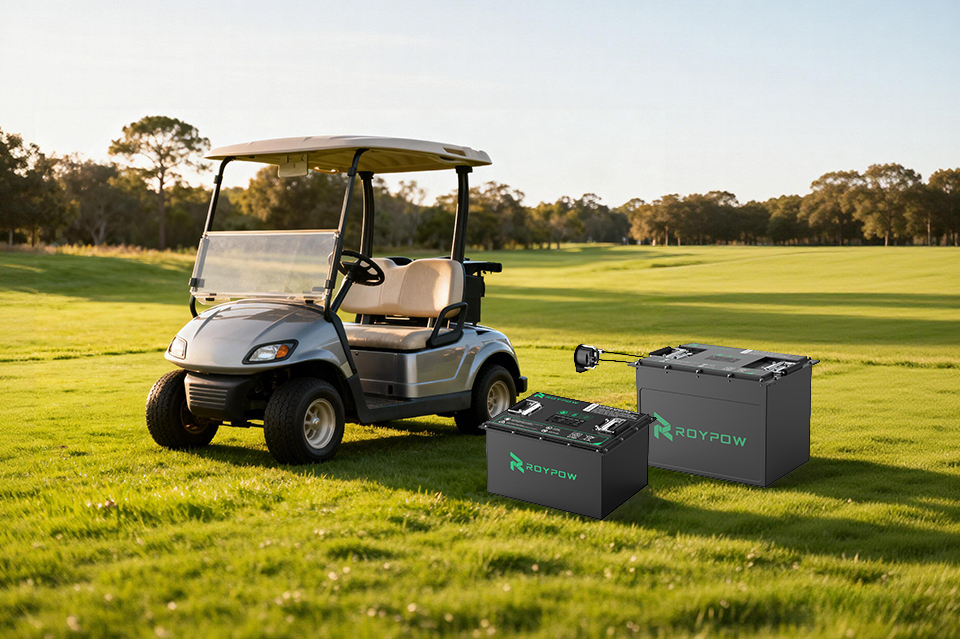
If you are replacing batteries in a Club Car golf cart in the global world market, the safest starting point is to identify the exact model, system voltage, controller type, and charger configuration before buying anything. Most Club Car DS and Precedent carts were built around 36V or 48V lead-acid battery packs, while newer Onward and Tempo models are commonly configured for 48V lithium or lead-acid systems depending on year and trim. A correct battery replacement must match the cart voltage, fit the battery tray, support the controller’s peak current demand, and work with a compatible charger.
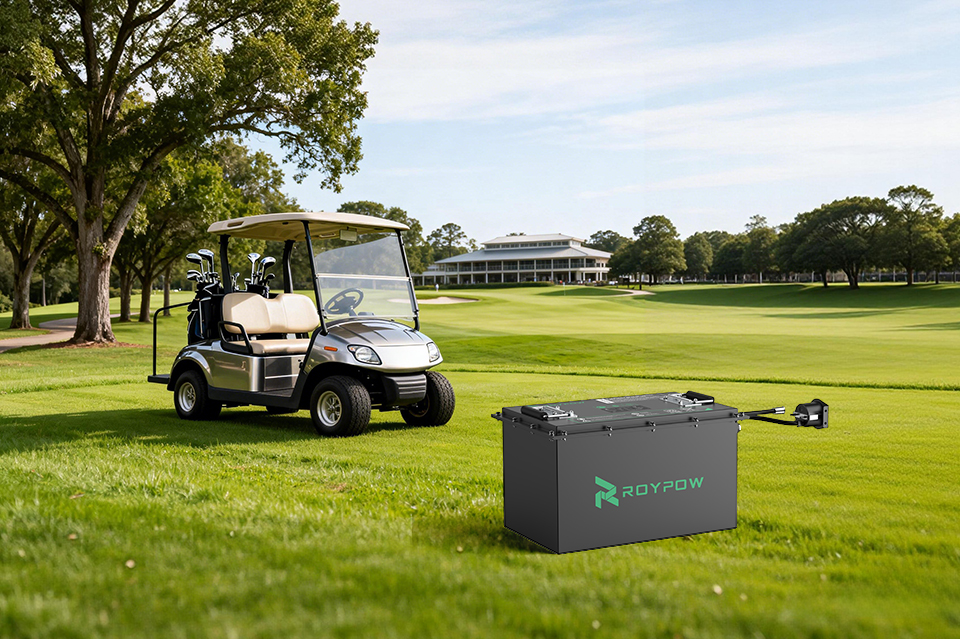
For many owners, LiFePO4 lithium is now the most practical replacement because it reduces weight, needs almost no routine watering, charges faster, delivers steadier voltage, and can provide a longer service life than flooded lead-acid batteries. However, lithium is not always a simple “swap and go” unless the battery system, charger, and wiring are selected properly. On many Club Car Precedent and DS conversions, the onboard computer, commonly called the OBC, may need to be bypassed or removed from the charging circuit. Using the wrong charger, ignoring the OBC, or connecting pack cables incorrectly can lock out the cart, damage components, or prevent charging.
For a global fleet operator, resort, golf course, university, warehouse, hotel, or private owner, the practical rule is simple: confirm the cart model and voltage first, then choose either a full lead-acid replacement set or a lithium system designed for Club Car compatibility. If you are upgrading to lithium, choose a LiFePO4 pack with an integrated Battery Management System, proper continuous and peak discharge ratings, a lithium-specific charger, clear installation guidance, and accessible after-sales support in your region. ROYPOW’s Golf Cart Batteries are designed for 36V, 48V, and 72V golf cart platforms and are supported by dedicated charger options, making them suitable for many Club Car replacement projects when correctly matched to the cart.
| Decision Point | What to Check | Why It Matters |
|---|---|---|
| Model | DS, Precedent, Onward, Tempo, Carryall, Villager, or other Club Car platform | Battery tray, wiring layout, charger system, and OBC setup vary by model and year. |
| Voltage | 36V, 48V, or 72V system | A wrong-voltage battery can damage the controller, solenoid, charger, and accessories. |
| Battery type | Flooded lead-acid, AGM, gel, or LiFePO4 lithium | Each chemistry has different charging, maintenance, weight, and lifecycle requirements. |
| Charger | Lead-acid charger or lithium charger | Most stock Club Car chargers do not charge lithium correctly without modification. |
| OBC status | Present, bypassed, failed, or not used | OBC issues are a common reason lithium conversions fail to charge. |
| BMS rating | Continuous current, peak current, low-temperature protection, communication | The BMS must support acceleration, hills, passengers, and controller demand. |
| Local support | Dealer, installer, parts availability, warranty process | Support is essential for fleets operating in multiple regions and climates. |
This table summarizes the core checks before purchasing. In practical terms, most installation problems start when buyers focus only on amp-hours and ignore cart electronics, charger behavior, or wiring details.
Know Your Club Car Model and Original Battery Layout

Club Car has built several electric platforms for personal transportation, golf courses, hospitality, municipal mobility, and utility work. In North America, Europe, the Middle East, Africa, Asia-Pacific, and Latin America, the most common models include the DS, Precedent, Tempo, Onward, Carryall, and Villager. In tourism centers such as Orlando, Dubai, Phuket, Cape Town, Barcelona, Cancun, Bali, and the Caribbean islands, Club Car carts are widely used by resorts and property operators. In trade hubs such as Los Angeles, Rotterdam, Singapore, Hamburg, Jebel Ali, Santos, and Busan, parts availability and battery logistics also affect replacement choices.
The Club Car DS is one of the best-known legacy models. Older DS carts may be 36V, often using six 6V batteries, while many later DS carts are 48V. The Club Car Precedent is commonly found in 48V configurations, often with six 8V lead-acid batteries or four 12V batteries depending on year and market. Newer Club Car Onward and Tempo platforms are often 48V, but factory lithium options and regional variations mean owners should never rely on model name alone. Always verify the serial number, battery compartment, charger plug, controller label, and the total voltage of the existing pack.
A battery pack’s voltage is calculated by adding the voltage of each battery in series. For example, six 8V lead-acid batteries make a 48V pack, while six 6V batteries make a 36V pack. A lithium replacement may use one integrated 36V or 48V pack, two parallel lithium modules, or a purpose-designed multi-battery kit. The physical battery tray matters as much as the electrical system. A lithium battery may be lighter and smaller, but it still needs firm mounting, cable strain relief, clean routing, and protection from abrasion.
| Club Car Platform | Common Factory Voltage | Typical Lead-Acid Layout | Replacement Consideration |
|---|---|---|---|
| Club Car DS 36V | 36V | Six 6V batteries | Best matched with a 36V lithium system or a complete 36V lead-acid set. |
| Club Car DS 48V | 48V | Six 8V or four 12V batteries | Check OBC and charger plug before lithium conversion. |
| Club Car Precedent | 48V | Six 8V batteries are common | OBC bypass is often required for lithium charging compatibility. |
| Club Car Tempo | 48V | Lead-acid or factory lithium depending on trim | Confirm whether the cart already has lithium-ready electronics. |
| Club Car Onward | 48V | Lead-acid or lithium depending on configuration | Accessories and speed settings may affect current demand. |
| Club Car Carryall | 48V or other commercial configurations | Varies by utility package | Workload, cargo weight, hills, and duty cycle must guide battery sizing. |
| Club Car Villager | 48V commonly | Passenger transport layout | Higher passenger loads require careful BMS and amp-hour selection. |
This comparison is a guide, not a substitute for inspection. Exported carts, refurbished fleets, and privately modified vehicles may have non-original controllers, chargers, solenoids, wiring, or battery trays.
When identifying the original battery configuration, look for the serial number plate, usually located near the passenger-side glove box or frame area depending on the model. Photograph the battery compartment before removing cables. Note the main positive and main negative cables, series jumpers, charger receptacle wiring, tow/run switch, and any accessory voltage reducer. A common mistake is assuming that all small wires connected to the pack are optional. In reality, some wires power the key switch, controller logic, reverse buzzer, lights, USB ports, GPS trackers, fleet management modules, or brake systems.
Lead-Acid or LiFePO4 Lithium: Choosing the Best Club Car Battery Type

Lead-acid batteries remain available globally and may still be acceptable for low-use carts where upfront cost is the main concern. They are familiar to many service technicians and can be sourced in many cities through automotive, marine, and golf cart distributors. However, flooded lead-acid batteries require watering, terminal cleaning, equalization practices, ventilation, and careful storage charging. They also lose usable voltage under load, become heavy as pack size increases, and may suffer shortened life if repeatedly deeply discharged.
LiFePO4 lithium batteries are increasingly preferred for Club Car battery replacement because they offer stable voltage, high usable capacity, lower weight, and longer cycle life. A lithium-equipped cart often accelerates more consistently, climbs hills with less voltage sag, and maintains performance late into the discharge cycle. For golf courses in Florida, fleet operators in Spain, island resorts in the Maldives, estate communities in South Africa, and industrial campuses in Japan or Korea, reduced maintenance can be more valuable than the initial purchase difference.
For buyers comparing product types, focus on the complete system rather than the battery label. A quality lithium solution includes robust cell selection, a well-programmed BMS, proper enclosure design, pre-charge or surge protection where needed, a lithium charging profile, clear state-of-charge display, and technical documentation. ROYPOW specializes exclusively in lithium battery technology and offers options such as 36V Golf Cart Batteries, 48V Golf Cart Batteries, and 72V Golf Cart Batteries for different vehicle platforms.
| Factor | Lead-Acid Battery Pack | LiFePO4 Lithium Battery Pack |
|---|---|---|
| Upfront cost | Usually lower at purchase | Usually higher at purchase but often lower over lifecycle |
| Weight | Heavy, often several hundred pounds | Much lighter, improving efficiency and handling |
| Maintenance | Watering, cleaning, equalization, corrosion control | Minimal routine maintenance under normal use |
| Charging | Longer charging time and more sensitive to partial charging habits | Faster charging with compatible lithium charger |
| Voltage behavior | Voltage drops noticeably under load | Flatter voltage curve and steadier performance |
| Storage | Needs regular charging to avoid sulfation | Lower self-discharge, but still requires proper storage state of charge |
| Sustainability | Recyclable but includes acid and heavy lead handling concerns | Longer life and higher efficiency support lower operating waste |
The best choice depends on usage. A private cart used occasionally on flat ground may tolerate lead-acid. A resort cart carrying passengers daily, a golf course fleet running multiple rounds, or a utility cart hauling tools across a large campus will usually benefit more from lithium.
OBC Bypass Rules for Club Car Precedent and DS Lithium Upgrades
The Club Car onboard computer, or OBC, was designed to manage charging behavior for certain lead-acid systems. In many DS and Precedent carts, the OBC monitors charging current and pack behavior, then communicates indirectly with the original charger. This system was useful for lead-acid charging, but it can conflict with lithium batteries and lithium chargers. For that reason, many Club Car lithium conversions require an OBC bypass so the lithium charger can connect directly to the battery pack under the control of the battery’s BMS.
An OBC bypass does not mean careless wiring. It means the charging path must be correctly reconfigured so the charger positive and negative reach the lithium pack as required by the battery manufacturer. Some installations involve replacing the charger receptacle wiring, bypassing the black OBC charge wire, installing a new charging port, or using a dedicated lithium charger connection. The correct method depends on the Club Car year, charger receptacle style, and battery kit design.
If the OBC is not bypassed when required, the cart may appear dead, fail to charge, charge only intermittently, or trigger charger faults. In some cases, the drive circuit may still work, but charging will not. In others, incorrect bypass attempts can disable the controller logic or accessory circuits. The safest approach is to follow the lithium battery manufacturer’s wiring diagram and verify all connections with a multimeter before energizing the system.
Technological capabilities behind lithium conversion
Modern lithium conversions rely on more than cells in a box. A high-quality system needs BMS design, pack thermal design, firmware logic, charger matching, enclosure engineering, and protection against overcurrent, overcharge, over-discharge, short circuit, and temperature extremes. ROYPOW’s in-house capabilities span BMS development, battery pack design, system integration, inverter-related engineering, software development, and testing. This matters for Club Car owners because the BMS is the central safety and performance layer during acceleration, regenerative events, hill climbing, charging, and storage.
BMS Compatibility with Club Car Controllers
The Battery Management System is the control and protection unit inside a lithium battery pack. It monitors cell voltage, pack voltage, current, temperature, and operating limits. In a Club Car battery replacement, the BMS must be compatible with the controller’s real-world demand. A cart that looks ordinary may draw high peak current when starting on a hill, carrying four passengers, using oversized tires, or running an upgraded motor and controller.
A mismatch between the BMS and controller can cause sudden cutouts. For example, if the controller asks for more current than the BMS allows, the BMS may disconnect the pack to protect itself. The driver may experience this as a cart that dies during acceleration, restarts after a pause, or fails under hill load. This is not always a defective battery; it may be an undersized battery for the application.
Continuous current rating, peak current rating, peak duration, low-temperature charging protection, and communication features should be reviewed before purchase. For stock Club Car carts used on golf courses, a properly sized drop-in lithium battery may be enough. For modified carts with rear seats, cargo beds, lift kits, high-speed controllers, or steep terrain in places such as San Francisco, Lisbon, Cape Town, Rio de Janeiro, or mountain resorts in Switzerland and Japan, the system needs more careful engineering.
| Use Case | Controller Demand | Battery Recommendation | Key BMS Feature |
|---|---|---|---|
| Flat golf course use | Moderate and predictable | Standard matched 36V or 48V lithium system | Stable continuous discharge and accurate SOC display |
| Four-passenger community cart | Higher during starts and turns | Higher amp-hour 48V lithium option | Strong peak current support |
| Lifted cart with large tires | Higher torque demand | Battery selected for modified controller load | Overcurrent tolerance and thermal monitoring |
| Utility cart with cargo | Variable and often heavy | Commercial-grade capacity sizing | Longer sustained current capability |
| Hilly resort route | Frequent high-load climbing | Lithium pack with sufficient reserve capacity | Heat and current protection |
| Cold-climate storage | Low use but temperature risk | Battery with low-temperature charge protection | Temperature-based charge cutoff |
| Fleet operation | High daily cycles | Integrated battery and charger solution | Diagnostics, reliability, and service support |
This table highlights why battery sizing is not only about range. A system must survive the highest current event the cart will realistically experience.
Step-by-Step Club Car Battery Installation Process
Before installation, park the Club Car on a flat surface, turn the key off, place the tow/run switch in tow if equipped, set the parking brake, remove jewelry, and use insulated tools. Batteries can deliver dangerous current, even at golf cart voltage. If you are not experienced with DC electrical systems, use a qualified technician. Fleet operators should standardize installation procedures across locations, whether the carts are in Dubai, Miami, Singapore, Rotterdam, Sydney, or São Paulo.
First, document the original wiring. Take clear photos from multiple angles. Label the main positive cable, main negative cable, series jumpers, charger leads, accessory reducer wires, and any small control wires. Second, disconnect the pack safely, normally starting with the main negative cable and then the main positive, while preventing tools from bridging terminals. Third, remove old batteries using proper lifting methods. Lead-acid batteries are heavy and contain acid, so use gloves, eye protection, and spill precautions.
Fourth, clean and inspect the battery tray. Corrosion should be neutralized and repaired. Loose hold-downs, cracked trays, damaged cables, burnt connectors, and weak solenoids should be addressed before installing new batteries. Fifth, position the new lithium battery or batteries according to the manufacturer’s layout. Use secure brackets or hold-downs so the pack cannot shift during braking or turning. Sixth, connect cables according to the wiring diagram, confirming torque values where specified. Never guess polarity.
Seventh, complete the OBC bypass if required. This step is especially important for many Club Car Precedent and DS lithium conversions. Eighth, install the lithium-compatible charger or charging port. A purpose-matched Golf Cart Battery Charger helps ensure the battery receives the correct voltage and charging profile. Ninth, verify pack voltage with a multimeter before turning the cart on. Tenth, power up the cart, test forward and reverse at low speed, check braking behavior, confirm state-of-charge display operation, and perform a short controlled road test.
Manufacturing capabilities that support consistent quality
Battery performance depends heavily on manufacturing control. ROYPOW operates large-scale production facilities, advanced manufacturing systems, automated production lines, and quality systems aligned with international automotive practices. Its testing center uses high-precision instruments for cell, battery system, BMS, charger, energy storage, and inverter testing. For global buyers, this kind of vertical integration helps reduce variation between batches and supports more reliable deployment across multiple markets.
Charger Compatibility: Why Original Club Car Chargers Usually Do Not Work with Lithium
A stock Club Car charger was generally designed for the chemistry and control logic of the original lead-acid pack. Lead-acid charging uses stages and voltage behavior that differ from LiFePO4 lithium charging. Lithium batteries require a charger with the correct constant-current and constant-voltage profile, a suitable termination behavior, and voltage limits aligned with the BMS. Using a lead-acid charger on lithium can lead to incomplete charging, charger failure, BMS cutoff, warning lights, or unsafe operation.
Many older Club Car chargers also depend on the OBC to enable or regulate charging. If the OBC is removed, bypassed incorrectly, or left in a circuit where it conflicts with the lithium system, the original charger may not start. Some owners try to trick the charger, modify plugs without understanding polarity, or reuse corroded receptacles. These shortcuts can create costly problems. A lithium conversion should include a compatible charger from the start.
In global logistics, charger input voltage also matters. A fleet in the United States may use 120V AC outlets, while Europe, Australia, the United Kingdom, South Africa, the Middle East, and much of Asia commonly use 220V to 240V AC. International resort groups and distributors should confirm AC input compatibility, plug type, certification requirements, and service part availability before placing bulk orders. Ports and trade hubs such as Shenzhen, Ningbo, Los Angeles, Hamburg, Rotterdam, Singapore, Jebel Ali, and Santos play a role in lead times, especially for seasonal golf and tourism demand.
Frequent Installation Errors That Can Disable a Club Car
The most common mistake is buying a battery by voltage only. A 48V lithium battery is not automatically suitable for every 48V Club Car. The BMS must handle the controller, the charger must match the battery, and the wiring must be correct. Another frequent error is leaving the OBC in the charging circuit when the lithium kit requires a bypass. This often results in a cart that drives but will not charge, or a charger that will not turn on.
Incorrect accessory wiring is also common. Many Club Car carts use lights, horns, radios, fans, USB ports, coolers, GPS modules, or fleet trackers. If these loads were previously connected to only part of a lead-acid pack, they may create battery imbalance or over-discharge problems. With lithium, accessories should generally be powered through a proper DC-DC converter or voltage reducer. Never tap a random section of a lithium pack unless the battery manufacturer specifically allows it.
Loose terminals, reversed polarity, undersized cables, missing fuses, and poor crimp connections can create heat and voltage drop. A lithium battery can deliver strong current, so weak connections may fail quickly. Another error is ignoring storage instructions. Lithium batteries should not be stored fully empty, and they should not be charged below the allowed temperature. For cold regions such as Canada, northern Europe, Korea, Japan, and mountain resorts, low-temperature charge protection is particularly important.
Finally, some owners install lithium and expect the factory battery meter to remain accurate. Many lead-acid meters estimate charge based on voltage, but lithium voltage stays flatter. A lithium-specific state-of-charge display or battery monitor provides a more reliable reading.
About Our Company and Global Support
ROYPOW TECHNOLOGY is a global company focused on lithium battery systems and energy storage solutions. With more than 20 years of experience in new energy applications, the company develops and manufactures lithium replacements for lead-acid batteries and related power products. Its golf cart battery solutions cover 36V, 48V, and 72V platforms, supporting owners and fleets that want cleaner operation, longer runtime, and lower maintenance compared with conventional lead-acid systems.
The company serves the global world market through manufacturing bases in Asia and subsidiaries or regional operations in countries including the United States, Brazil, the United Kingdom, Germany, the Netherlands, South Africa, Iraq, Australia, Japan, and Korea. This structure is important for golf courses, resorts, dealers, and equipment operators that need responsive service rather than only a product shipment. In large markets such as North America and Europe, and in fast-growing mobility regions across the Middle East, Southeast Asia, Africa, and Latin America, local support can determine how quickly a fleet returns to service.
Service capabilities for buyers and fleets
ROYPOW provides one-stop support that can include product design, manufacturing, monitoring, warranty handling, technical guidance, and after-sales service. The company emphasizes quick response and fast resolution, which is particularly valuable for golf courses during tournament season, resorts during peak tourism periods, and industrial campuses where utility carts are part of daily operations. Buyers can also compare additional market options through regional suppliers such as Golf Cart Batteries, but they should always confirm system compatibility, warranty terms, charger matching, and technical documentation before purchase.
In 2026 and beyond, the Club Car battery market is expected to move further toward lithium. Key trends include smarter BMS diagnostics, Bluetooth or app-based monitoring, improved charger efficiency, better low-temperature protection, recyclable battery programs, stricter transport and safety standards, and more fleet electrification policies. Cities and tourism destinations are also pushing quieter, lower-emission mobility. Golf courses are increasingly evaluating total cost of ownership rather than only battery purchase price. For many operators, the winning solution will be a battery system that combines safety, serviceability, sustainability, and predictable uptime.
| Buyer Type | Typical Priority | Recommended Buying Focus | Practical Note |
|---|---|---|---|
| Private Club Car owner | Reliable range and simple charging | Matched voltage lithium kit with charger | Confirm model year and OBC needs before ordering. |
| Golf course | Fleet uptime and low maintenance | Standardized battery and charger program | Train staff on charging and storage procedures. |
| Resort or hotel | Passenger comfort and daily availability | Higher capacity lithium with service support | Consider hills, heat, and multi-shift operation. |
| University or campus | Safety and predictable operations | BMS protection and documented installation | Use proper DC-DC converters for accessories. |
| Industrial site | Durability under workload | Commercial-grade current capability | Review cargo weight and route profile. |
| Dealer or distributor | Inventory fit and technical support | 36V, 48V, and 72V coverage | Stock chargers, cables, displays, and service parts. |
| International fleet group | Consistency across regions | Certified products and global support | Check AC input, certifications, and shipping timelines. |
This buying guide shows that the right battery is application-specific. A cart used on a flat private road has different needs from a hotel shuttle climbing steep coastal roads or a maintenance cart carrying tools across a large property.
Frequently Asked Questions
How do I know whether my Club Car is 36V or 48V?
Count the batteries and read their labels, then add the voltages of batteries connected in series. Six 6V batteries equal 36V. Six 8V batteries or four 12V batteries equal 48V. You can also check the controller label, charger rating, and serial number information. When in doubt, measure pack voltage with a multimeter or ask a qualified technician.
Can I replace only one bad lead-acid battery in my Club Car?
You can, but it is usually not ideal if the pack is old. A new battery mixed with aged lead-acid batteries can become unbalanced, and overall performance will still be limited by the weakest batteries. For dependable results, many owners replace the full set or upgrade to a complete lithium system.
Is LiFePO4 lithium safe for Club Car golf carts?
LiFePO4 is widely regarded as one of the safer lithium chemistries when designed and installed correctly. Safety depends on a quality BMS, correct charger, proper wiring, secure mounting, and compliance with the manufacturer’s instructions.
Do I need to bypass the OBC when converting a Club Car Precedent to lithium?
Many Club Car Precedent lithium conversions require an OBC bypass, especially when using a lithium charger that must connect directly to the battery system. The exact method depends on year, charger receptacle, and battery kit design. Always follow the battery manufacturer’s wiring diagram.
Will my original Club Car charger work with lithium batteries?
Usually not. Most stock Club Car chargers were designed for lead-acid batteries and may depend on OBC control. Lithium batteries need a lithium-compatible charger with the correct voltage and charging profile.
What size lithium battery do I need for a Club Car?
The answer depends on system voltage, desired range, passenger load, terrain, tire size, controller rating, and accessories. A stock 48V Club Car on flat terrain may need less capacity than a lifted four-passenger cart used on hills. For many 48V carts, owners compare several amp-hour options and choose based on daily distance and reserve capacity.
Can I use a 72V lithium battery in a 48V Club Car?
No. A 72V battery should only be used in a vehicle designed or converted for a 72V system, including a compatible controller, motor, charger, solenoid, and accessories. If you are working with a true 72V platform, consider a purpose-designed 72V Lithium Golf Cart Battery.
Are 36V Club Car carts worth converting to lithium?
Yes, many 36V Club Car DS carts can benefit from lithium if the system is correctly matched. A 36V lithium conversion can reduce weight, improve voltage stability, and simplify maintenance. Buyers should look for properly engineered 36 Volt Lithium Golf Cart Batteries and confirm controller compatibility.
What is the biggest cause of lithium conversion failure?
The most common causes are incorrect wiring, wrong charger, ignored OBC bypass requirements, undersized BMS current rating, and accessory wiring mistakes. Careful documentation before removal and verification before startup prevent most failures.
How long do LiFePO4 golf cart batteries last?
Service life depends on cell quality, BMS design, depth of discharge, temperature, charging habits, and workload. In many applications, LiFePO4 batteries provide far more cycles than flooded lead-acid batteries, which can reduce long-term replacement frequency.
Should I choose one large lithium battery or multiple smaller batteries?
Both designs can work if engineered correctly. One integrated battery can simplify wiring and monitoring. Multiple modules can improve layout flexibility. The key is that the full system must match voltage, current demand, charger profile, and mounting requirements.
Do lithium batteries make a Club Car faster?
Lithium batteries do not automatically change controller speed settings, but they can make performance feel stronger because voltage remains more stable under load and pack weight is lower. Speed changes should be handled carefully and legally according to local vehicle rules.
Can I install Club Car lithium batteries myself?
Experienced owners with DC electrical knowledge can install some drop-in systems, but professional installation is recommended if the cart needs OBC bypass, wiring repair, accessory rewiring, or controller upgrades. Safety and correct polarity are critical.
Where can I buy compatible lithium batteries for a Club Car?
Buy from a supplier that can confirm voltage, BMS rating, charger compatibility, installation steps, warranty terms, and regional support. ROYPOW offers lithium Golf Cart Battery solutions for multiple golf cart platforms, including 36V, 48V, and 72V systems.
What should global buyers watch for in 2026?
Global buyers should watch for improved BMS diagnostics, stronger sustainability rules, better recycling programs, smarter chargers, stricter safety certifications, and wider adoption of lithium fleets in golf, hospitality, campus mobility, and light utility transport.